
Finding Cambridge Resident Records
Cambridge does not maintain one open list of every resident. The useful record changes with the starting point. Begin with the street number when the question concerns a parcel or a block. Begin with a full name, date of birth, and ZIP only when a voter confirmation is appropriate. For a past household, the strongest route is often a dated city directory paired with a deed, newspaper, or census record. Each source carries a different label, such as owner, party, voter, occupant, heir, or interment. Those labels must stay distinct.
The official trail can establish a recorded connection, not a complete picture of daily life. A deed party may not live at the property. A parcel mailing address can belong to a trust, agent, or tax contact. A voter result confirms registration status, not daily occupancy. Renters, children, protected addresses, utility customers, and people absent from a particular record may never appear in a public search. Treat an absent result as a coverage or access question before treating it as a conclusion.
- For a known address, search the Cambridge Property Database by street, number, and unit, then preserve the Map-Lot-Unit identifier.
- Open the mapped parcel in Cambridge GIS or myCambridge to compare its location, block, neighborhood, and related city information.
- Use that address, Map-Lot, or a known party in the Middlesex South Registry to inspect the recorded instrument and legal description.
- For a historical person or address, check the Cambridge Room and Historical Commission collections, then pair the closest directory edition with a released federal census year.
- When a defined city record is not in a portal, send a narrow request to the Cambridge Public Records Access Officer rather than asking for everything about a person.
Cambridge Resident Records Offices
Cambridge research is divided among city, registry, court, and state custodians. Cambridge Assessing maintains the current assessment view and directs searchers to its property database and GIS. The Middlesex South Registry of Deeds keeps the permanent recorded-land trail for the Cambridge district. The Election Commission provides the local route to the state voter confirmation tool. The City Clerk holds local vital, cemetery, historical, legislative, and business-certificate material. These offices overlap in subject but not in custody, so the record type should decide the first call or portal.
Middlesex South Registry of Deeds
208 Cambridge Street
Cambridge, MA 02141
617-679-6300
Cambridge Assessing
795 Massachusetts Avenue
Cambridge, MA 02139
617-349-4343
Cambridge Election Commission
689 Massachusetts Avenue, Suite 1
Cambridge, MA 02139
617-349-4361
Cambridge Address and Parcel Lookup
The Cambridge Property Database is the best first stop when the address is known. Its inspected public controls begin with street, unit, and property type, and the advanced options narrow results with Map-Lot-Unit, sale information, value, tax district, property class, building style, living area, and sale fields. It is not a general owner-name tool. That limitation matters because a surname-first search belongs in the Registry name index, a voter confirmation, or historical collections, not in an assessor form that was designed around property.
| Cambridge Property Database field | How it works | Research use |
|---|---|---|
| Street and unit | Address-led starting fields | Find the current assessment record for a known location. |
| Map-Lot-Unit | Parcel components, with a city format such as 123-456-789 | Carry the identifier to GIS and land-record research. |
| Sale date and price | Advanced field and parcel history detail | Locate a likely transfer to test in the Registry. |
| Class, style, value, or tax district | Administrative property filters | Separate similar addresses without inferring a household. |
The myCambridge address tool adds civic, historic, voter, ZIP, Census, and nearby-place panels around an address. It is useful for normalizing a location before a record search. A mapped parcel is still visual reference data. Deeds and Land Court plans, rather than the polygon outline, control the legal description and boundary.
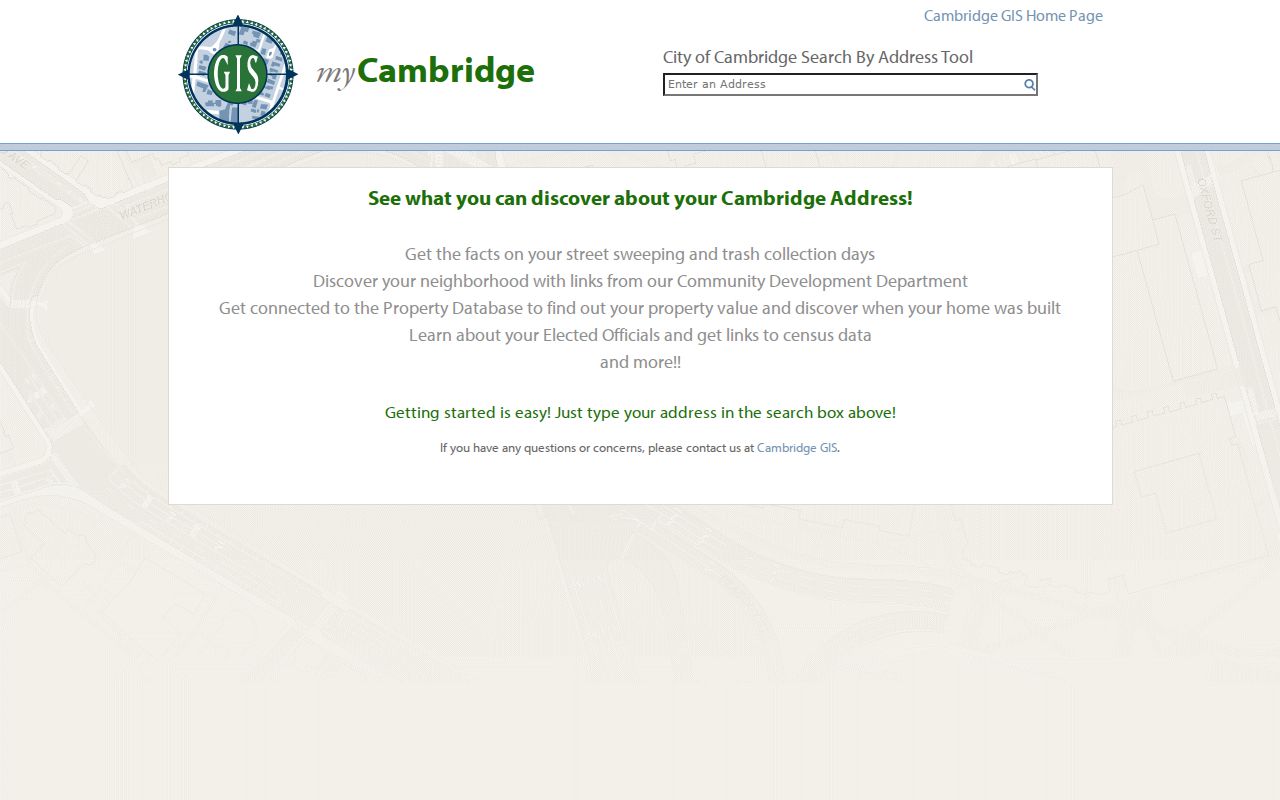
The address panels show why one street search can lead to several different record systems without turning the map into proof of who occupies a home.
Cambridge Voter Status Checks
Massachusetts makes the ordinary voter tool a confirmation route, not a browsable resident roll. The state search requested through Cambridge uses a name, date of birth, and residential ZIP. A successful result can report registration or pre-registration, active or inactive status, polling place, and elected officials. Cambridge’s polling resources also point to an address lookup, but address formatting must match the state system. Harvard dorm addresses have a special pattern: a zero street number followed by the dorm name.
Broader voter-file fields have a separate request and use context. The Secretary of the Commonwealth identifies public fields such as name, address, party, date of birth, status, and voter ID, while ordinary public files withhold phone, email, veteran, permanent-absentee, confidential-voter, and minor information. A historical poll list can be a valuable dated snapshot, but it is neither a current roster nor a record of ballot choices.
A Cambridge Voter Registration Search entry hands the user to the state confirmation process. The illustrated statutory search requirements make clear that the tool starts with several identifying fields rather than a street-wide list.
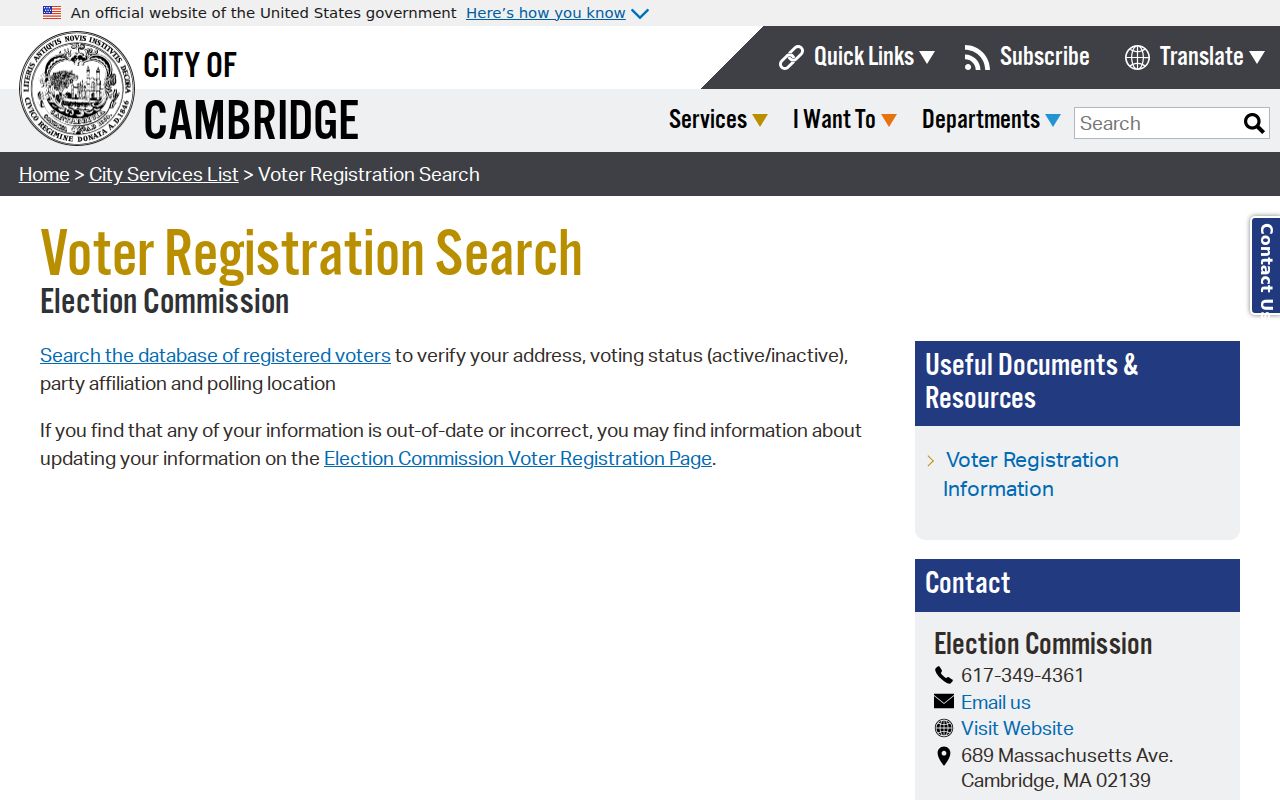
Use a voter match as one dated registration clue, then compare it with another independent record before attaching it to a person or address.
Current Cambridge Residents Directory Sources
Current Cambridge resident evidence is a set of narrow indexes rather than a single directory. The property database describes a parcel. The Registry records a land transaction. The voter tool confirms limited registration information for a person whose identifying inputs are already known. A court result identifies a party and case history, subject to access rules. Business and license systems can show a formal role, but a business contact address is not a home address. Comparing the record label, date, and custodian prevents these sources from being mistaken for one another.
| Cambridge source | What it can establish | Custodian | Access route |
|---|---|---|---|
| Property Database | Assessment, situs, sale, value, class, and possible owner or mailing labels. | Cambridge Assessing | Free address and advanced search. |
| State voter confirmation | Registration or pre-registration, activity status, polling place, and officials. | Massachusetts elections system | Name, date of birth, and residential ZIP. |
| Middlesex South Registry | Recorded parties, instrument dates, legal descriptions, and title links. | Registry of Deeds | Online recorded and registered land search. |
| MassCourts | Public party, case, court, and disposition clues. | Massachusetts Trial Court | Department, division, location, and search-tab controls. |
| Corporation Search and eLIPSE | Formal filings, officers, agents, or a license record. | Massachusetts state systems | Public portal, with address-type caution. |
Source choice follows the question. An address starts with property and GIS. A recorded ownership interest starts at the Registry. A current registration check needs the voter inputs. A careful name search uses several independent dimensions, such as a middle initial, date, address, formal role, or family connection. The result is an evidence trail, not a general biography.
Cambridge Court Docket Clues
MassCourts can help distinguish a formal party record from an address or directory entry. Its public search begins by choosing Court Department, Court Division, and Court Location, then uses Name, Case Type, Case Number, or Ticket/Citation Number. Civil name searches have formatting rules, and a case-number search is exact about capitalization, spaces, and leading zeroes. Results can show a party row, case number, type, location, filing date, and case link. The case view may add events, docket entries, dispositions, and some documents.
Cambridge District Court serves Cambridge, Arlington, and Belmont, but its current physical location is in Medford. Middlesex Probate and Family Court South serves Cambridge from Woburn after its 2020 move from East Cambridge. Those locations prevent a wasted trip, but an online index is not the full court file. Impounded, sealed, juvenile, adoption, confidential family, and other protected material remains unavailable unless the court permits access.
The official MassCourts search instructions show the department, location, and tab choices that shape a search.
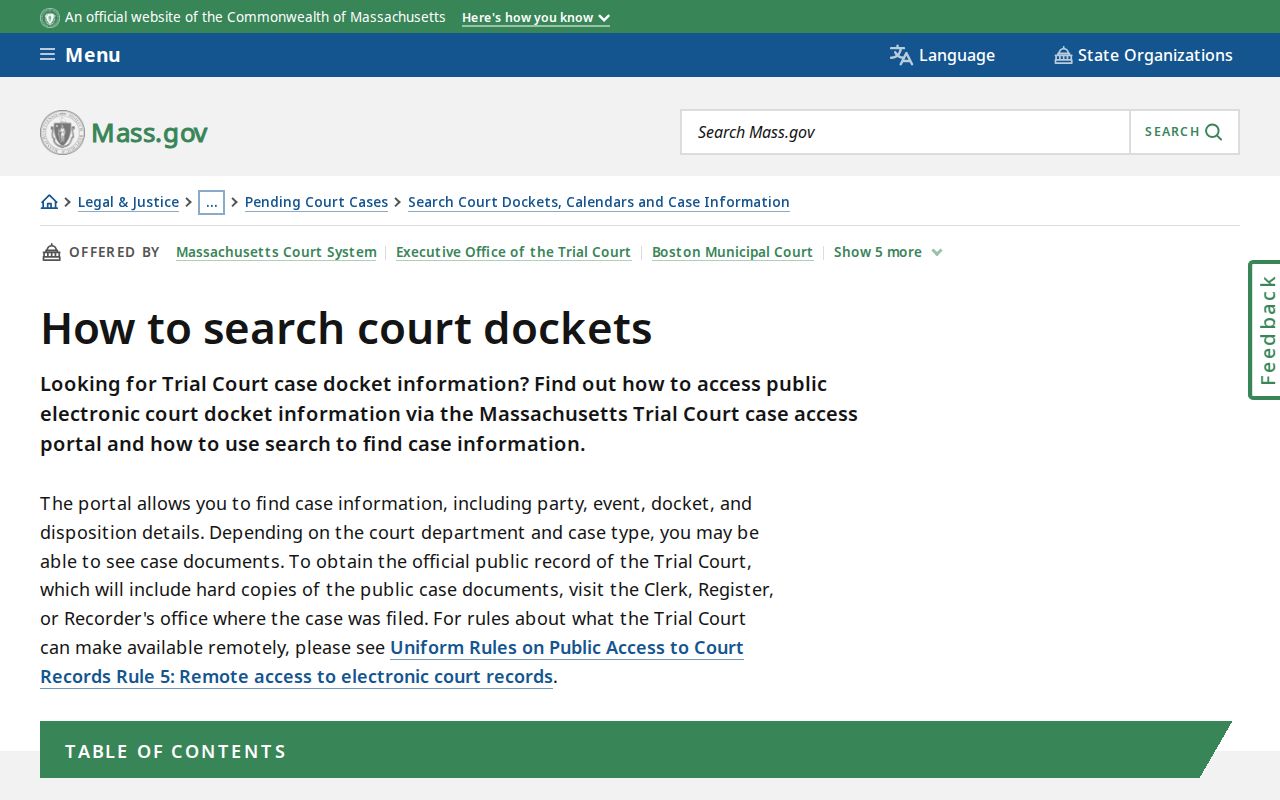
Record the exact party spelling, court, case number, dates, and disposition before deciding whether a result relates to the person being researched.
Cambridge Vital Record Routes
The Cambridge City Clerk is the local starting point for records within its custody. The city describes a certified birth copy route for a Cambridge birth or a person who was a Cambridge resident at birth, with access limits for certain records and a genealogy route by phone. Its death page states that a death certificate is public when the city holds it under the listed custody conditions. Both current local pages list a $15 fee, although an older request PDF shows a different amount, so the live clerk page or clerk confirmation should control.
For the state route, the Registry of Vital Records and Statistics holds the modern collection from 1936 forward, while the State Archives holds state records for 1841 through 1935. The state genealogy guidance says this is not a complete online index and that on-site research is required. M.G.L. c. 46 sections 2A and 13 restrict specific birth, marriage, fetal-death, amended, and adoption-related material. A relationship record should be requested by its exact type and custodian, rather than by a blanket age rule.
The City Clerk’s birth-certificate instructions describe the local request path and its conditions.
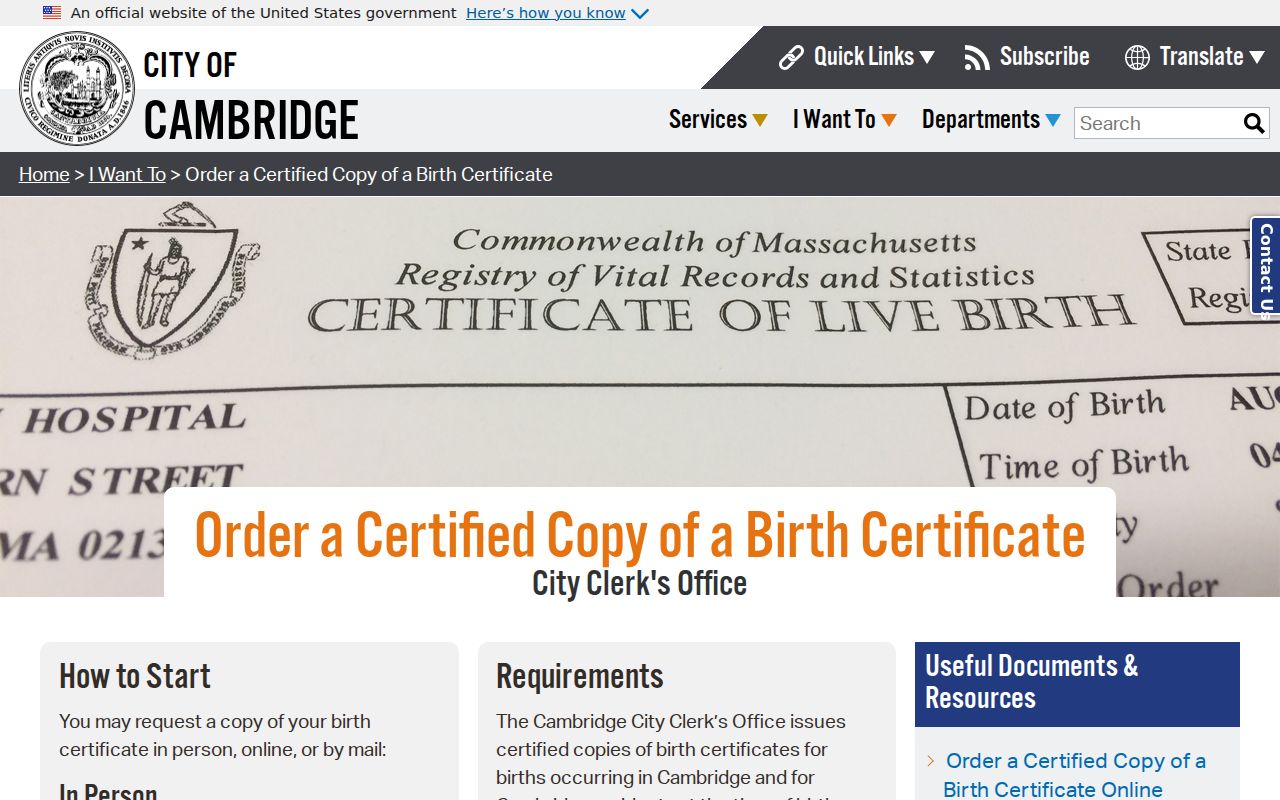
The form route is useful for a documented life event, but it does not replace the access test or turn a certificate request into a general name lookup.
Cambridge’s 1630 Record Story
Cambridge has an unusually deep collection trail. The City Clerk describes legislative records reaching to 1630 and vital statistics reaching into the early 1800s. In June 2026, the Clerk announced a new online viewing platform with more than 85,000 historical City records after a four-year digitization effort. Its announced search dimensions are general category, specific category, and timeframe. That is an important new discovery surface, but the announcement does not prove that every collection is indexed by personal name or that every record series has the same detail.
City custody overlaps, but does not merge, with the Cambridge Public Library, Historical Commission, Registry, and Trial Court. A municipal action might be held by the Clerk, an address in a directory, a building detail in a House Book, a conveyance in land records, and an estate filing at Probate. Keeping the collection name, repository, date range, and access condition in a research log preserves those differences.
Historical Cambridge Resident Directories
Cambridge city directories form the key historical residents directory layer. Local sources describe a near-continuous run from the mid-1840s through 1972, while the Historical Commission notes 1848 to 1874 plus scattered later holdings and the State Library lists a separate group of editions. Exact access varies by year, edition, format, and digitization. The Cambridge Room combines directories with genealogy material, local newspapers, yearbooks, archives, and research help. The Historical Commission adds permits, maps, architectural files, and address research aids.
A directory entry may name a person, spouse or family member, occupation, work or business address, and home address. Reverse directories become useful around 1905 because they move from street number to occupant or business. A directory is a publisher’s time slice, not a census. Compare the edition with the nearest released federal census, a deed, a permit, or a newspaper notice before creating an address timeline. The complete collection and entry-reading approach belongs on the Cambridge city directory page.
The Cambridge Public Library online resources point to digital directories, newspapers, yearbooks, Ancestry Library Edition, and HeritageQuest.
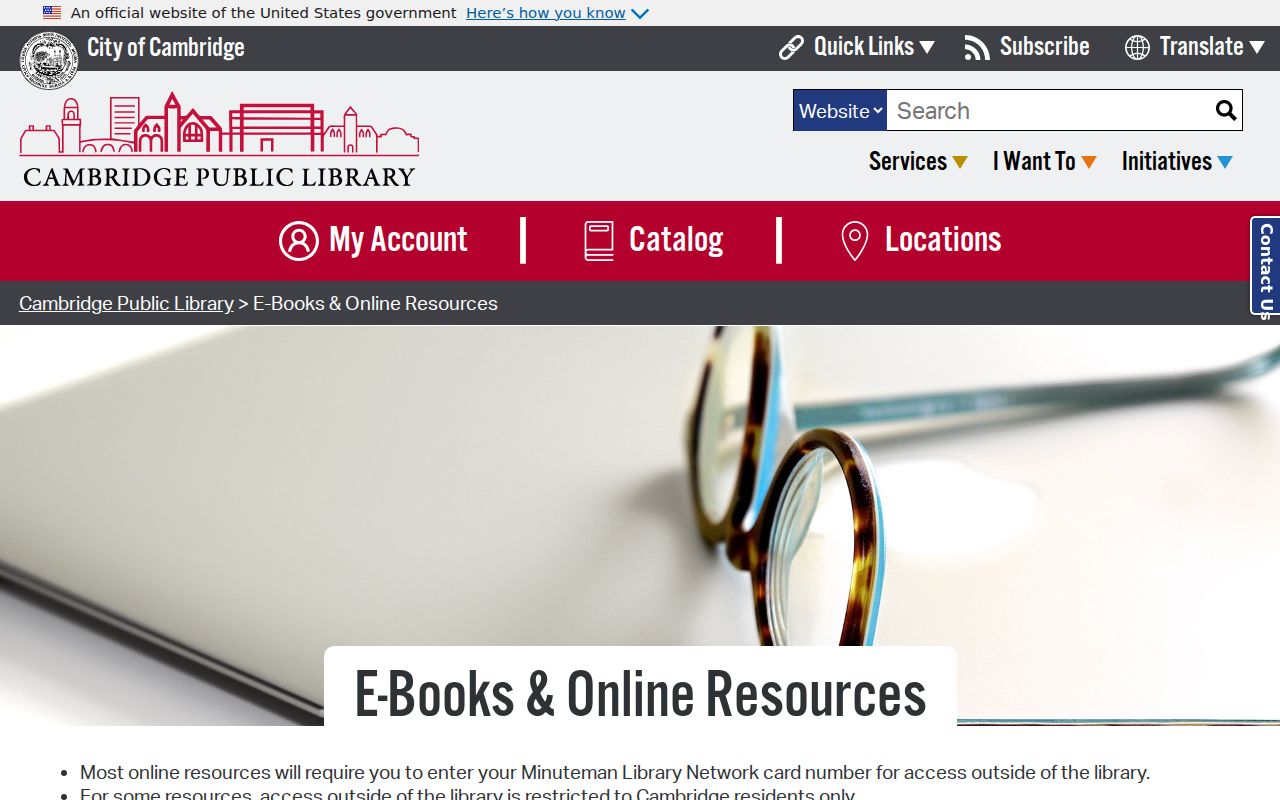
Library resources offer a dated historical path when a modern record does not name the past person connected with an address.
Cambridge Registry Resident Trails
The Middlesex South Registry of Deeds records title instruments, not a resident list. Its online system supports Recorded Land, Registered Land, plans, book and page, document, property, name, certificate, recorded date, and unindexed searches. Party controls, document types, town filters, and date ranges help narrow a Cambridge search. Read the legal description as well as the street address. An address can change, a unit can be renumbered, and a parcel can be split or combined while the legal chain continues.
The Registry says its online copies can be viewed, printed, or downloaded free. Certified copies follow a different route: the official page lists $1 per page for a deed or document and $5 for a registered-land certificate. In October 2025, the Registry announced that grantor indices for 1896 through 1973 were online. That expansion improves historical work but is not a universal coverage promise. Use unindexed-property search, book and page citations, plan numbers, or office research when the ordinary index stops.
- Parcel
- A mapped assessment unit identified by fields such as Map, Lot, and Unit. It is a bridge to records, not proof of a household.
- Index
- A searchable list that points to a record. It may omit images, fields, or unindexed material.
- Grantor and grantee
- The party conveying an interest and the party receiving it in a recorded instrument. Neither label alone proves occupancy.
- Reverse directory
- A historical address-to-occupant directory, useful for later Cambridge editions.
Cambridge ZIP and Resident Geography
Cambridge has five ZIP areas, 02138, 02139, 02140, 02141, and 02142, but the city GIS recognizes 13 neighborhoods. The lines do not match. A ZIP can cover several neighborhoods, and a neighborhood can cross ZIP boundaries. The city’s dated ZIP map is a helpful boundary reference, while its open-data ZIP polygons supply a more recent city layer. Exact mail delivery still belongs with USPS. A ZIP filter is therefore a geography aid, not a public list of everyone who receives mail in that area.
Keep three address labels separate. The situs address identifies the physical parcel. The mailing address is where correspondence is sent and can be outside Cambridge. The legal description identifies land through a deed, plan, lot, block, or metes-and-bounds language. myCambridge and the Property Database help with the first two; the Registry and Land Court plans control the third. This distinction keeps a tax contact or institutional address from being mislabeled as a resident address.
Cambridge Record Requests and Limits
When a portal does not show a defined city record, the Cambridge Public Records Access Officer is the next route. Massachusetts Public Records Law, M.G.L. c. 66 § 10, works alongside exemptions in M.G.L. c. 4 § 7(26). A precise request states the record series, date range, address or name, and preferred format. Official guidance calls for an initial response within 10 business days, with possible municipal extensions. Fees, redactions, and the appeal process depend on the request and exemption, so a broad demand for private information is less useful than a narrow, record-specific request.
| Official route | Best use | Important limit |
|---|---|---|
| City or state custodian | Verify an original record, request a permitted copy, or ask about a missing defined series. | Coverage, access, and redaction rules vary by record type. |
| Commercial people-finder category | A possible lead that needs independent checking. | Results can be stale, merge same-name people, omit protected people, and carry charges. |
Cambridge has also warned about impersonation and permit-related scams. Type an official address yourself or use a trusted city directory, and confirm a fee request through the custodian’s published contact route. The Registry’s non-certified document copies are available directly without charge, while certified copies have the listed fee. A solicitation that offers a record for a high price is not proof that it came from the government.