
Cambridge Previous Residents by Record Era
Previous residents of a Cambridge address appear in different sources at different times. The oldest useful source is not always a deed, and the most recent document is not always proof of occupancy. Start with the period you need, then use the source type that can answer that part of the address story. The table separates land ownership, listed occupants, building evidence, and family evidence so each result keeps its proper weight.
| Source | Years it covers | Where held | What it shows |
|---|---|---|---|
| Registry grantor indices | 1896–1973 explicitly announced online; other coverage needs checking | Middlesex South Registry of Deeds | Party-to-party conveyances and instrument citations |
| Registry plans and Land Court material | Instrument-specific | Registry and Land Court records | Parcel divisions, legal boundaries, plans, certificates |
| Cambridge city directories | Near-continuous 1846–1972; editions vary | Cambridge Room, CHC, State Library | Listed occupants, addresses, professions, businesses |
| Reverse directories | About 1905 onward in later volumes | Cambridge Room and CHC | Address-to-occupant leads |
| Federal census | Publicly released through 1950 | NARA, Census, and library databases | Household and enumeration-date context |
| Permits and House Books | 1886–1937 permits; 1875–1932 House Books | Cambridge Historical Commission materials | Work, owner-surname, foundation-plan, and building clues |
Use the Registry trail for a Cambridge conveyance, reverse directories for a Cambridge address-to-person lead, and the census for a household snapshot. A Cambridge permit record marks an application or inspection record, not a completed project. A Cambridge directory shows the publisher’s association of a person with an address in that edition. These distinctions prevent a neat-looking Cambridge timeline from becoming an unsupported claim.
Start Cambridge Address History With the Parcel
The first step is a stable property reference. The Cambridge Property Database begins with street number, street name, and unit, then offers advanced parcel, value, sale, and classification filters. The inspected public search does not expose an owner-name input. Save the current Cambridge street form, unit, Map-Lot-Unit identifier, and the labels used for location, situs, owner, or mailing fields if they appear in a result.
The situs address identifies the property location. A mailing address identifies where tax correspondence is sent and can belong to a representative, trust, business, or billing destination. Neither label alone proves who lived in the building. The myCambridge address tool can add Cambridge civic and map context before the title search begins.
Note: Cambridge property labels identify administrative fields, so preserve the portal wording instead of treating a mailing field as an occupancy claim.
Trace Cambridge Past Owners Through Deeds
The Middlesex South Registry of Deeds is the title trail for Cambridge. Cambridge is in the Massachusetts southern district for Middlesex County land records. Its online system for Cambridge supports Recorded Land, Registered Land, plans, book and page, document, property, name, certificate, recorded-date, and unindexed searches. Filter the town to Cambridge and read the legal description. A Cambridge street label can change, a unit can be renumbered, and a parcel can be split or combined, while the description and plan can keep the trail connected.
- Use the current Cambridge parcel details to locate the latest deed or instrument by property, document, book and page, or known party.
- Record the grantee and grantor named in the Cambridge instrument, plus its date, number, book and page, description, plan, and unit reference.
- Search the seller as a grantee to locate that party’s earlier acquisition, then repeat the sequence backward.
- Separate deeds from mortgages, discharges, liens, releases, corrections, and other instruments that are not conveyances.
- When the ordinary search ends, use Unindexed Property, plan or certificate references, and Registry office research rather than guessing at a gap.
Three terms make the trail easier to read. They describe roles in a land record, not who occupied the property.
- Grantor / grantee
- The grantor conveys an interest; the grantee receives that interest in the recorded instrument.
- Chain of title
- The documented sequence of conveyances and related title records that connects one interest transfer to an earlier one.
- Legal description
- The parcel language, plan reference, or unit and certificate detail used to identify land more reliably than an old street form.
Cambridge Address History and the 1896–1973 Index
The Registry, which covers Cambridge, announced in October 2025 that historic grantor indices from 1896 through 1973 are online. That expansion makes a long stretch of Cambridge past-owner research easier to begin from home, but it is not a universal start date for every Cambridge deed, plan, image, or registered-land record. Check the returned Cambridge index and document image together. A party name in an index is only a lead until the instrument and later transfers are read.
Registry materials for Cambridge state that online recorded-document copies can be viewed, printed, or downloaded without charge. If an official certified copy is needed, the Registry lists $1 per page for a deed or document and $5 for a registered-land certificate, with a mail procedure available through its certified-copy page. Earlier, missing, or unindexed Cambridge items may still require office research.
Note: Keep the document type beside every party name, because a release, correction, or mortgage record can look like a transfer.
Cambridge Past Residents in Directories and Census
Cambridge past residents are not always the same people as Cambridge past owners. Cambridge directories can place occupants, businesses, family members, professions, and addresses near an edition date, while reverse listings become useful for Cambridge address-first work in later volumes from about 1905. The collections and their year-by-year access routes are covered on the Cambridge city directory page. Use that Cambridge shelf for the household layer after the deed chain provides a property timeline.
Cambridge address timeline: latest recorded deed → nearest directory edition → reverse directory where available → closest released census through 1950 → newspaper or obituary lead → probate docket if an estate follows. Keep each Cambridge date and relationship label attached to the source. A directory entry is not a title record, and a census household is not a recorded ownership interest.
When a Cambridge person disappears, test more than one explanation. The name may be abbreviated, listed under a spouse or business, or absent from an edition. The Historic Cambridge Newspaper Collection can help bridge a Cambridge directory gap, but preserve its publication date and page before treating a notice as evidence of a death or move.
Note: Cambridge directory and census dates answer different questions, so retain both dates when household evidence appears to conflict.
Cambridge Past Residents in House Books and Permits
The Cambridge Historical Commission research aids add a building-centered layer. Its materials identify a Building Department permit index for 1886 through 1937 by owner surname, City Engineer House Books for 1875 through 1932 with measured foundation plans, and an architectural inventory covering about 13,000 Cambridge structures. Files can also contain photographs, newspaper clippings, deed research, permits, and biographies of past or present owners.
The Historical Commission’s research-aids page shows the directory, permit, house-book, and architectural-file paths used for a Cambridge previous-residents timeline.
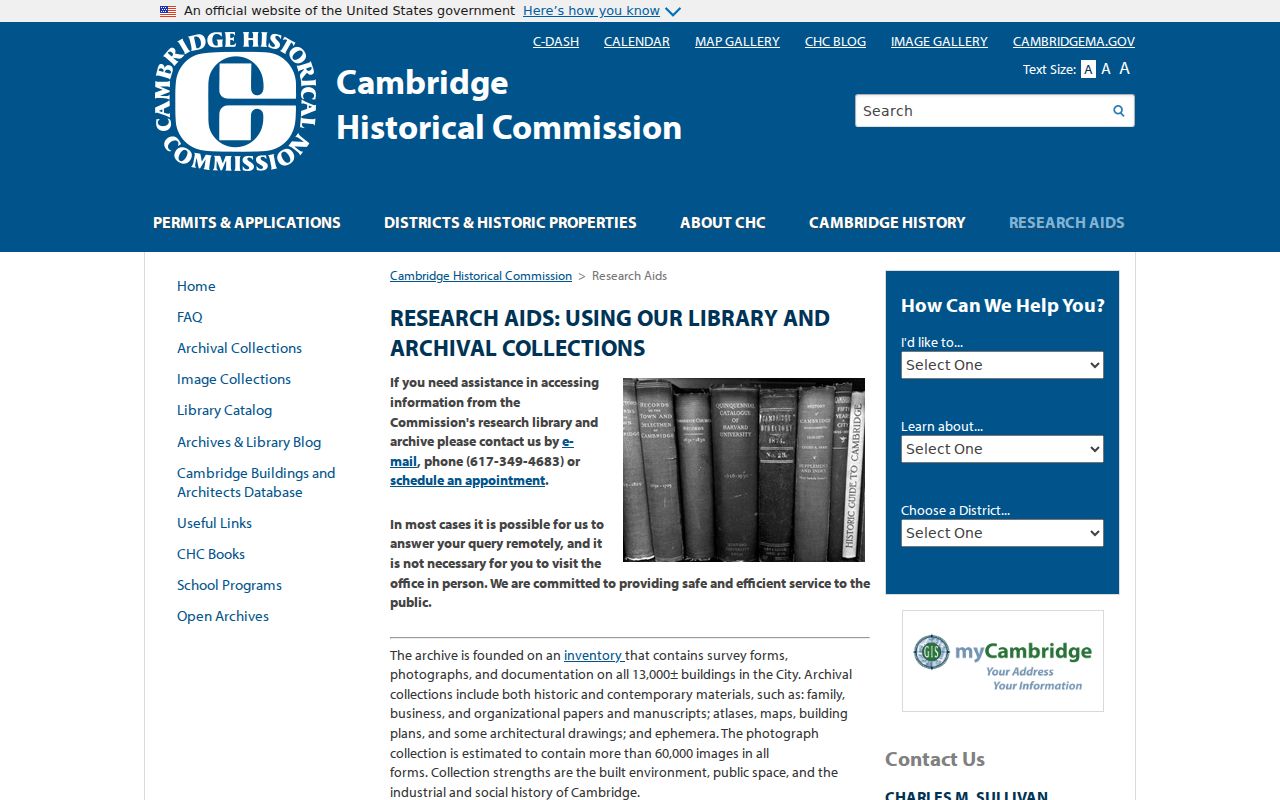
A Cambridge house-history request is more useful when it includes the modern address, suspected older Cambridge forms, Map-Lot details, and a date range. Ask CHC staff to check Cambridge directories, permit indexes, House Books, maps, and architectural files separately. Contact for archival access is chcarchives@cambridgema.gov or 617-349-4683.
Cambridge Address History and 85,000 City Records
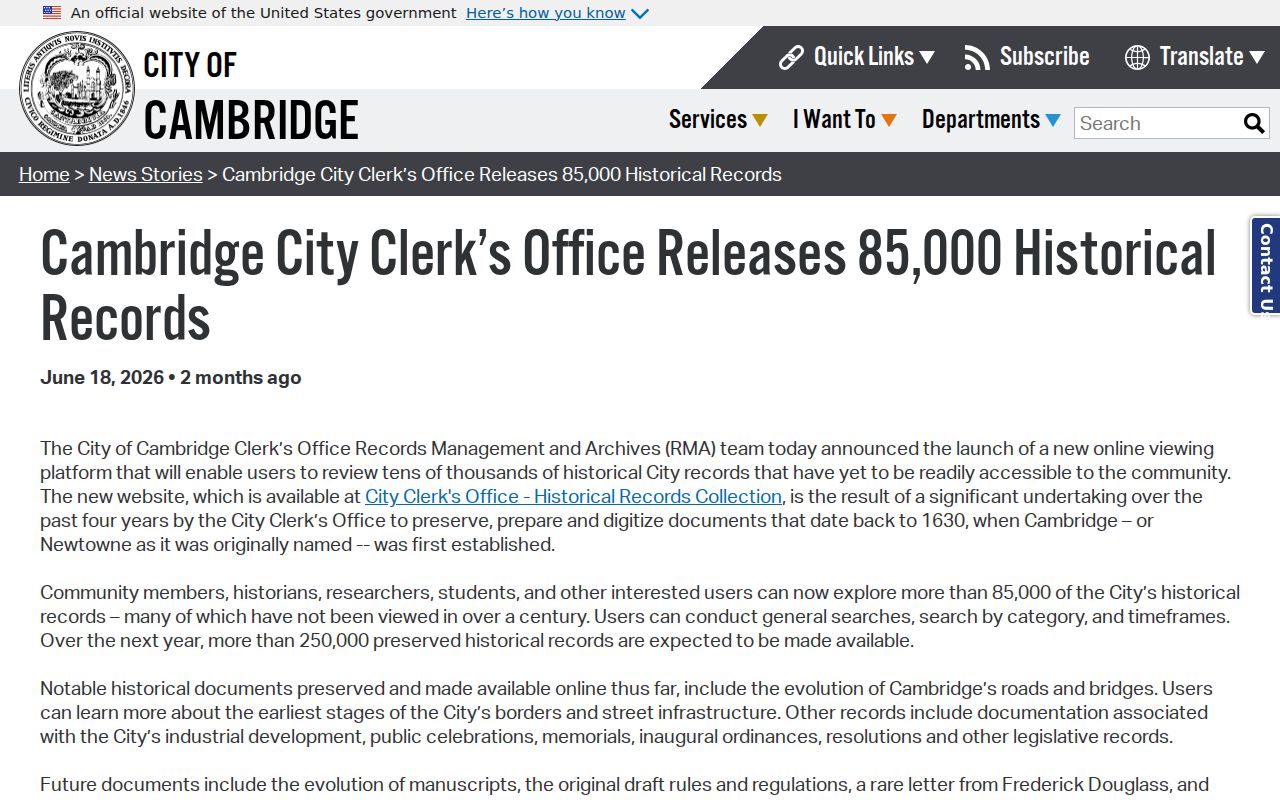
In June 2026, the Cambridge City Clerk announced a new online viewing platform with more than 85,000 historical City records dating to 1630 after a four-year digitization effort. The announcement describes general-category, specific-category, and timeframe searches. It can add civic or municipal context to a house history, but the announced material did not provide a direct platform URL or a complete field schema.
The City Clerk announcement documents the scale and timing of this Cambridge historical-records release.
Use the Cambridge platform as a new viewing layer, not as a replacement for the Cambridge Registry, library, or Historical Commission. Cambridge municipal records, directories, maps, and deeds remain in different custody systems and may describe the same address in different ways.
Note: Cambridge’s announced platform does not establish that each City Clerk record series has a searchable personal-name index.
Cambridge Past Residents Need Address Continuity
Cambridge’s historical street forms can break a simple address search. The official research did not identify one dated, citywide street-renumbering table, so a specific renumbering year should not be assumed. Compare the block, cross street, neighboring names, parcel description, and map evidence across editions. Keep the old and modern address forms as separate search terms in the timeline.
The City’s historical map layers include 1854 Walling, 1865 Chase, and 1916 Bromley material. The Historical Commission also lists Hales, Hopkins, Bromley, and Sanborn sources. Maps establish period geography and building context; deeds and Land Court plans remain the authority for title and legal boundaries.
Build a Cambridge address-reconciliation note before merging results. Put the modern Cambridge address beside the older Cambridge form, the cross street, the block or map reference, and the legal description. Then add the Cambridge directory year, Cambridge map sheet, Registry citation, and source date. This small Cambridge record log makes it clear whether the Cambridge evidence describes the same parcel, an adjoining parcel, or a nearby address with a similar name. It also leaves an honest trail when the Cambridge sources do not line up.
Cambridge Past Residents at a Probate Endpoint
When a recorded party appears to have died, look for a death or obituary lead before assuming the title chain ends. If an estate was filed, a probate docket can identify a fiduciary, heirs, counsel, or petition. Middlesex Probate and Family Court South serves Cambridge but is now in Woburn, following its move from East Cambridge in 2020. The online docket is not a complete substitute for the clerk-held file, and some material is restricted or impounded.
The Middlesex Probate and Family Court South provides the court’s current contact and access information. Cambridge City Clerk death records and obituary material can establish a separate event trail, but a later deed should still be read to see whether an estate representative or heir actually conveyed the interest.
Lawful use. Use Cambridge previous-resident research for family history, house history, estate questions, and personal curiosity. Do not use fragments from public records to track, harass, or harm anyone.