
Cambridge Resident Lookup Records
A Cambridge resident lookup has no single official master roll. The useful record depends on the question. The assessor identifies a parcel and its assessment context, the deed index records an interest transfer, and the voter tool reports a limited registration result. Court, vital, probate, cemetery, and historical collections add dated evidence. Each source has a different keeper and a different limit, so one matching name is only a lead. The strongest result is a small set of records that agree on a date, address, relationship, or formal role.
| Record source | What it can confirm | Cambridge or state custodian | Access route |
|---|---|---|---|
| Assessment parcel | Situs, sale and value context, plus any displayed ownership or mailing label | Cambridge Property Database | Free address and parcel search |
| Land instrument | Recorded transfer, parties, date, legal description, book or document reference | Middlesex South Registry of Deeds | Online index and images; certified copies separately |
| Voter result | Registration or pre-registration, active status, polling place, and officials | Cambridge Voter Registration Search | Name, date of birth, and residential ZIP |
| Court docket | Party role, case dates, events, and disposition where public | Massachusetts Trial Court docket search | Department-specific public index |
| Vital record | Life event or relationship evidence under custodian rules | Cambridge City Clerk or RVRS | Record-specific request and eligibility rules |
When an address is known, begin with the property database and retain the exact situs or mailing label it displays. When the person has a known date of birth and ZIP, the voter confirmation route may be a better first check. A Cambridge resident lookup based on an old name usually needs a court, directory, or City Clerk date to separate one person from another. The Registry then tests a property interest, not daily presence at that property.
Cambridge Voter Lookup Inputs
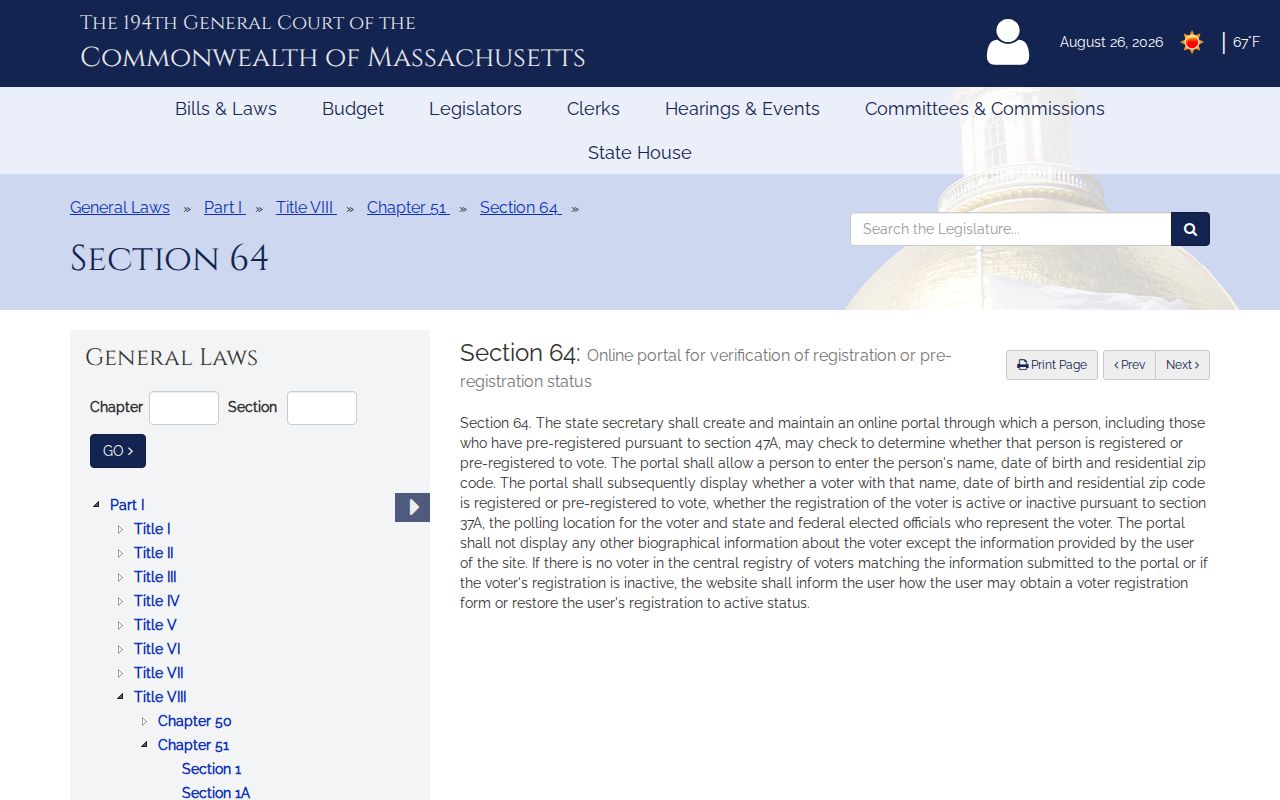
The Cambridge voter-search entry point leads to the Massachusetts confirmation service. It requires a name, date of birth, and residential ZIP. A successful search returns registration or pre-registration status, active or inactive status, a polling place, and elected officials. It does not provide a public biography. An inactive result is not the same as a cancelled registration, and an empty result can reflect formatting, a changed address, a protected record, or an unmatched input.
| Search field | Format | Why it matters |
|---|---|---|
| Name | Text | Identifies the voter or pre-registrant candidate. |
| Date of birth | Date or date text | Separates same-name records without displaying a full public biography. |
| Residential ZIP | Five-digit ZIP | Tests the residential jurisdiction used by the state service. |
The voter-search statute shows why this is a confirmation tool. In the ordinary public voter-file context, phone, email, veteran status, permanent-absentee status, confidential voter information, and minors' information are not public. Cambridge address formatting matters too. The Election Commission notes that Harvard dorm addresses use a zero street number plus the dorm name, so a conventional number can produce a false no-match.
The captured Massachusetts voter-search record shows the statutory name, date-of-birth, and ZIP inputs that support a Cambridge resident lookup.
Use the returned status as one dated confirmation, then compare it with an independent record rather than treating it as a complete address history.
Note: A current registration result confirms only the limited status returned by the state service.
Cambridge Court Docket Checks
The MassCourts search starts with Court Department and can then narrow by division and location. Its tabs include Name, Case Type, Case Number, and Ticket or Citation Number. Civil name searching has formatting rules: the last name needs at least two characters in the required capitalization pattern, while the first name has its own minimum. A Case Type search uses a beginning date, ending date, and type, with a maximum one-month date interval. A case-number search must match capitalization, spaces, and leading zeroes.
A result may show party rows, case number, case type, court location, filing or open date, and a link to more details. The linked view may supply party, event, docket, disposition, and some documents, depending on the court department and case type. Duplicate case-number rows can be normal because more than one party is displayed. For a Cambridge resident lookup, record the exact party spelling, role, court, case date, and disposition before deciding whether the result belongs to the person being checked.
| Docket detail | Research value |
|---|---|
| Exact party name and role | Distinguishes a party row from an assumed identity match. |
| Case number and department | Allows a later search or clerk request to be tied to the correct matter. |
| Filing, event, and disposition dates | Places the record in time and prevents a current-status assumption. |
| Document availability | Shows whether a public index result leads to an available document or a custodian route. |
The Cambridge District Court is legally the Cambridge court but is physically in Medford. That location detail is a useful Cambridge records check when an older court address appears in a file or citation.
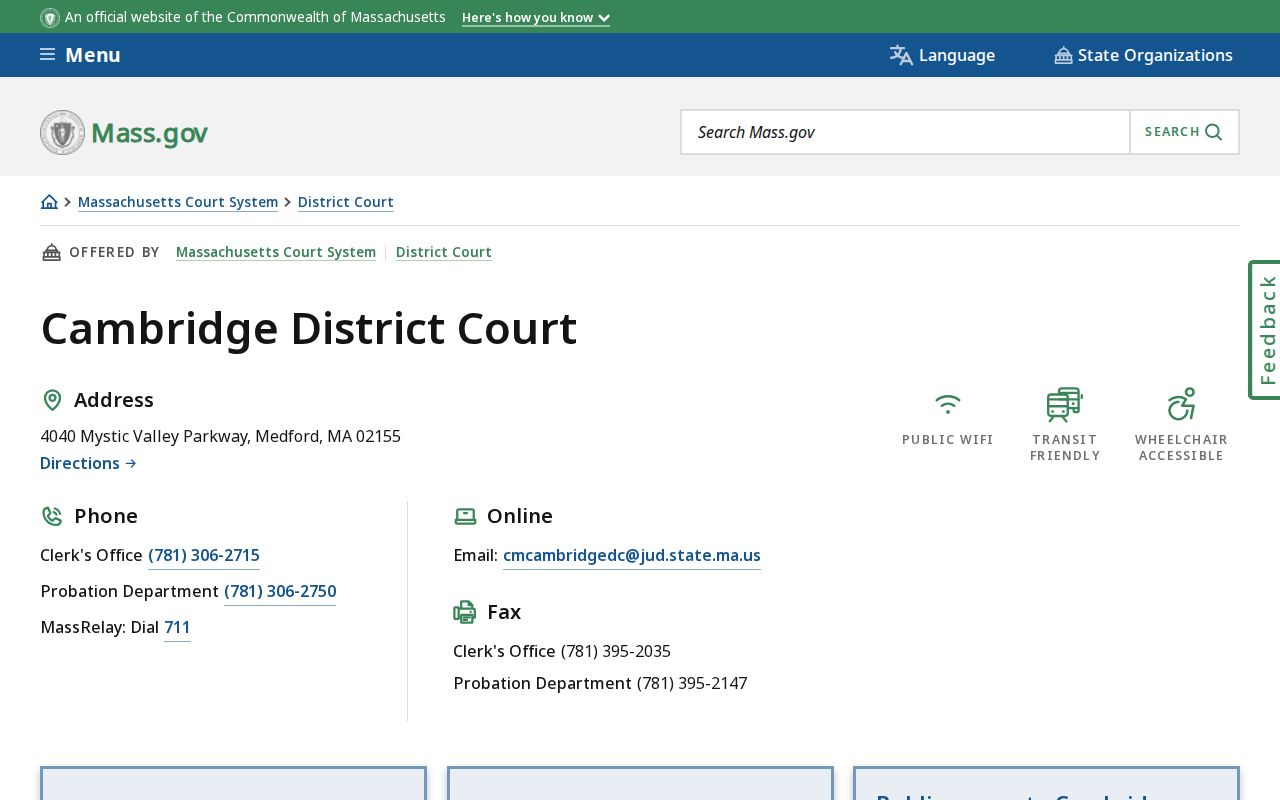
The current court location helps separate venue from the building where a clerk or public-file request is handled.
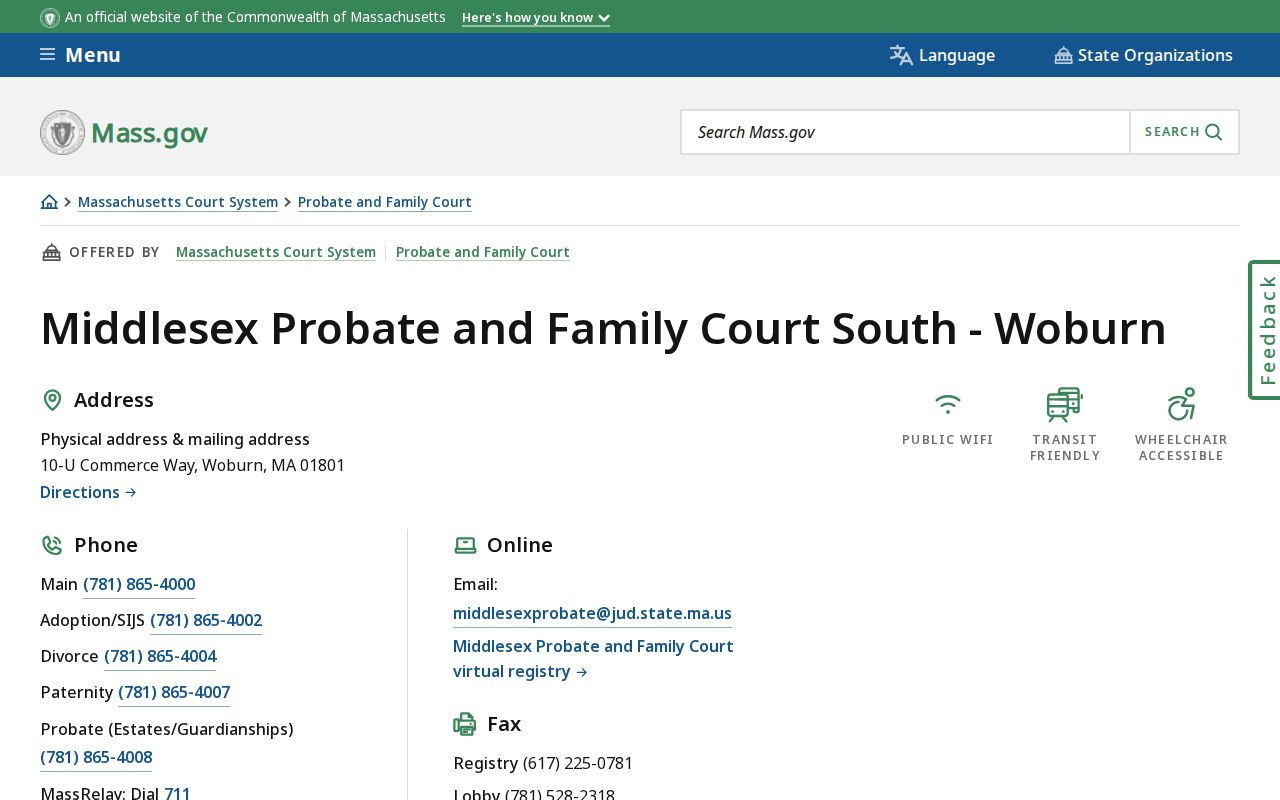
Probate is a separate route for an estate, fiduciary, heir, counsel, or last-address clue. Middlesex Probate and Family Court South moved from East Cambridge to Woburn in 2020 after roughly 120 years at the former location. Online dockets do not make impounded, sealed, juvenile, adoption, or other protected material public.
The official Middlesex Probate location record provides the current public access route for Cambridge matters.
A public docket can identify a case trail, but a clerk or register controls any permitted file or certified-copy request.
Cambridge Resident Cross-Checks
Same-name errors are common in a compact city with students, long-running historical collections, businesses, and recurring surnames. A Cambridge resident lookup should match at least two independent details before a record is treated as belonging to one person. Useful combinations include a middle initial and case date, a directory address and a parcel, a spouse or parent named in an eligible vital record, or a business role and filing date. A deed party may be a seller, buyer, trustee, or company representative. A directory entry is tied to its edition year. Neither establishes a person's current daily presence.
- Write down the exact name, variant spelling, date, address, or formal affiliation already known.
- Use the voter tool only when name, date of birth, and residential ZIP are available, then preserve the limited status returned.
- Test a parcel interest through the assessor and Registry, labeling situs and mailing information exactly as the record does.
- Compare the same spelling against a court, probate, vital, directory, or formal filing record with a compatible date.
- Keep both matches and misses in a small evidence log, including the source and retrieval date.
- Docket
- A court's running case index of parties, events, filings, and outcomes. It is not automatically the whole case file.
- Index and image
- An index points to a record. An image is the scanned or viewable record itself, when the custodian makes it available.
- Certified copy
- A custodian-issued copy authenticated for official use when the record and request rules permit it.
Historical confirmation often belongs in the library rather than a modern portal. A directory, yearbook, or newspaper can date an address or school connection, while current-facing records answer a different question. For a household trail through those editions, use the Cambridge city directory collections instead of assuming a present-day lookup will supply a historical list.
Cambridge Vital Record Routes
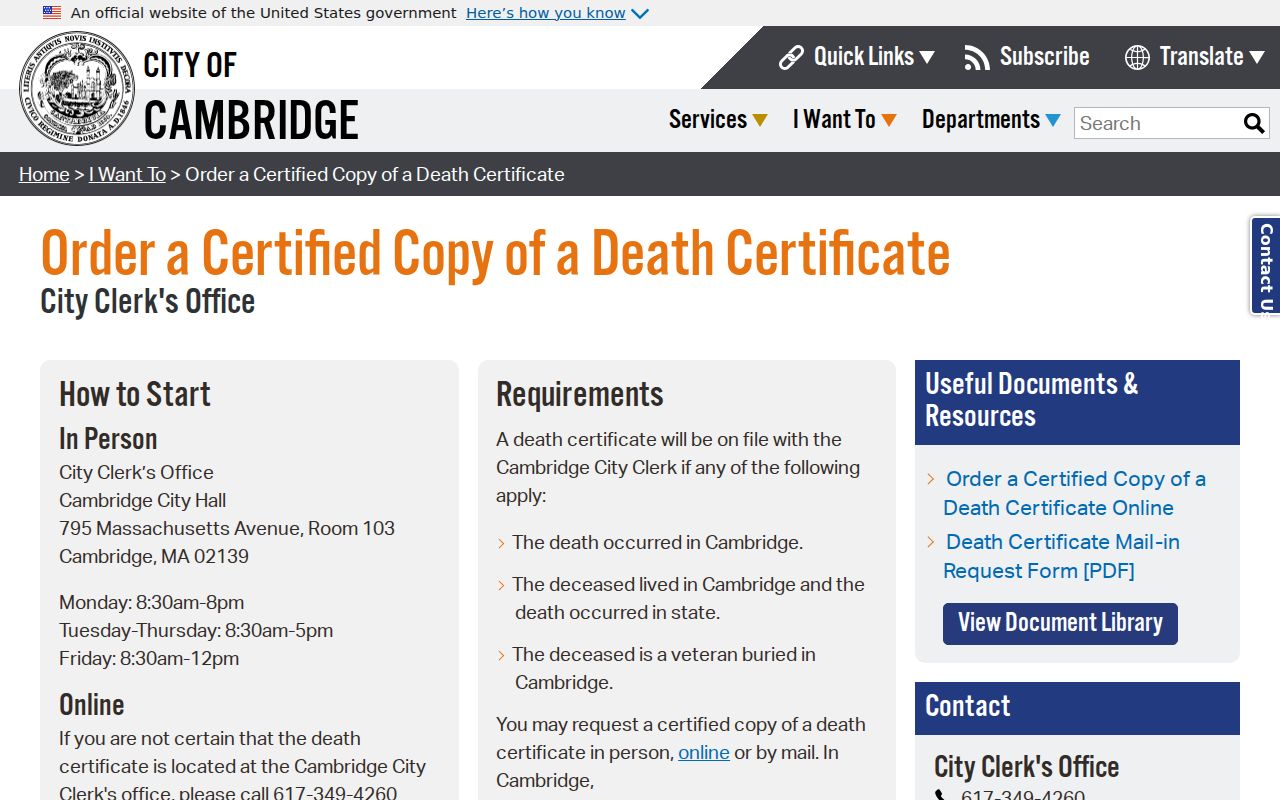
The Cambridge death-certificate route is a local identity and event source under the City's custody rules. Cambridge holds a certificate when death occurred in Cambridge, when a Cambridge resident died in Massachusetts, or when a veteran is buried in Cambridge. The City states that death records are public, no identification is required, and the current local fee is $15. Requests may be made in person, online, or by mail. A death record can support a date or relationship check, but it does not establish every prior address.
Birth and some marriage or adoption-related materials have narrower rules. Cambridge birth requests can be available for a Cambridge birth or Cambridge residence at birth, with eligibility and identification rules for nonpublic requests. Genealogy questions go to the City Clerk by phone at 617-349-4260 rather than the ordinary online route. The statewide Registry of Vital Records and Statistics has its own ordering channels and fees, while the State Archives holds the 1841 to 1935 state collection and RVRS holds 1936 to present.
The City's death-record instructions identify the local custody test and public-access statement used in a Cambridge resident lookup.
Use the current City page rather than an older form when checking a fee or required request detail.
Note: M.G.L. c. 46 restrictions vary by record type, requester, and custody history.
Cambridge Formal Role Records
When a person is difficult to distinguish by name alone, a formal filing can supply a role and date. Massachusetts Corporation Search offers Entity Name, Individual Name, Identification Number, and Filing Number modes. A result can include entity type and identifier, organization or reinstatement dates, principal and Massachusetts offices, resident agent, officers, directors, managers, signatories, filings, and notes. Those are formal filing facts, not proof that an individual lives at a listed address.
The state eLIPSE license search allows individual or business searching by name, city, state, ZIP, board, type, or license number. Record the displayed license number, board, status, and public address type. A public contact address may be tied to an organization or service location, so a Cambridge resident lookup should use it only as an affiliation clue and confirm it elsewhere.
Cambridge Records Request Route
When a needed city record is not in an online index, the lawful fallback is a precise request rather than a broad search. Under the Massachusetts Public Records Law, M.G.L. c. 66, especially section 10, Cambridge can receive a request through its public-records process. State guidance generally calls for an initial response within 10 business days, while redactions, permitted fees, extensions, and appeals depend on the record and request. A request for a defined series is more likely to reach the correct custodian than a demand for everything connected to a name.
Use the Cambridge public-records portal to state the department or custodian, date range, person or address, record description, and preferred format. For example, ask for a specified permit file, City Clerk certificate category, or publicly releasable code record. The response may confirm that a record is restricted, unavailable, or held by a different office. That answer is part of an accurate Cambridge resident lookup, not an invitation to guess.
Cambridge Resident Lookup Limits
Public access has firm boundaries. The ordinary voter-file context withholds phone and email fields, confidential voter information, and minors' information. Motor-vehicle addresses are protected by federal law. Court files can be impounded or sealed, and vital-record access depends on the record and requester. The Massachusetts Address Confidentiality Program gives a substitute address to qualifying survivors and protected health-care professionals. A missing address may be an intentional safeguard, not a research error.
Correct a factual government-record error with the custodian. Keep screenshots and request correspondence private when they contain dates of birth or addresses. Do not use a public document to reconstruct a protected address or to reach beyond the purpose the record supports. A Cambridge resident lookup remains most useful when it preserves the record's date, role, limits, and source instead of turning a partial hit into a claim about a person.
Lawful use. Use Cambridge records for personal, lawful research and civic transparency. Never use names, addresses, or record details to stalk, harass, threaten, or intimidate another person.